As a binder in iron-ore pelletising, bentonite raises green and fired pellet strength. We explain why a low-dose, high-performance clay matters to steelmakers.
The binder that makes pellets possible
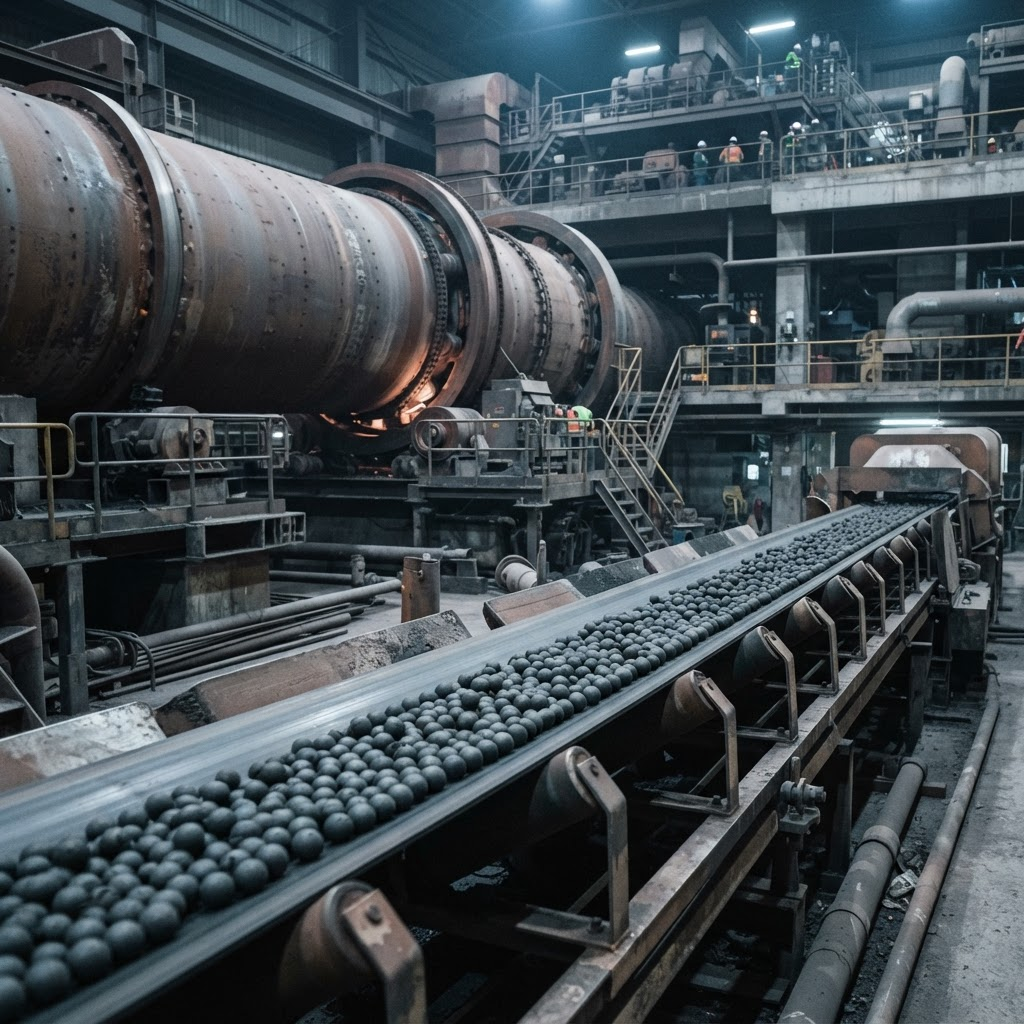
Iron-ore fines are agglomerated into uniform pellets before they enter the blast furnace or direct-reduction plant. Bentonite is the classic binder: its swelling and water-absorbing properties bind the moist fines into green balls strong enough to survive handling, drying, and firing.
Green strength and drop resistance
Green pellets must withstand conveyor transfers and stacking without crumbling. A high-quality sodium bentonite delivers the plasticity and wet strength needed for high drop numbers and low fines generation, which directly protects yield.
Why dosage efficiency matters
Because bentonite adds silica and alumina to the pellet, steelmakers want maximum binding at minimum dose. A high-montmorillonite, well-activated clay hits target green and fired strength at lower addition rates — improving iron content in the finished pellet and reducing slag volume downstream.
Consistency across large volumes
Pelletising plants consume bentonite in bulk, so batch-to-batch consistency is essential to a stable process. Sourcing pelletising-grade clay directly from the manufacturer ensures uniform swelling index and moisture across large, repeat consignments.