Green-sand casting relies on bentonite for green strength, permeability, and reusability. Here is how the right clay improves casting quality and reduces defects.
What green-sand bonding actually does
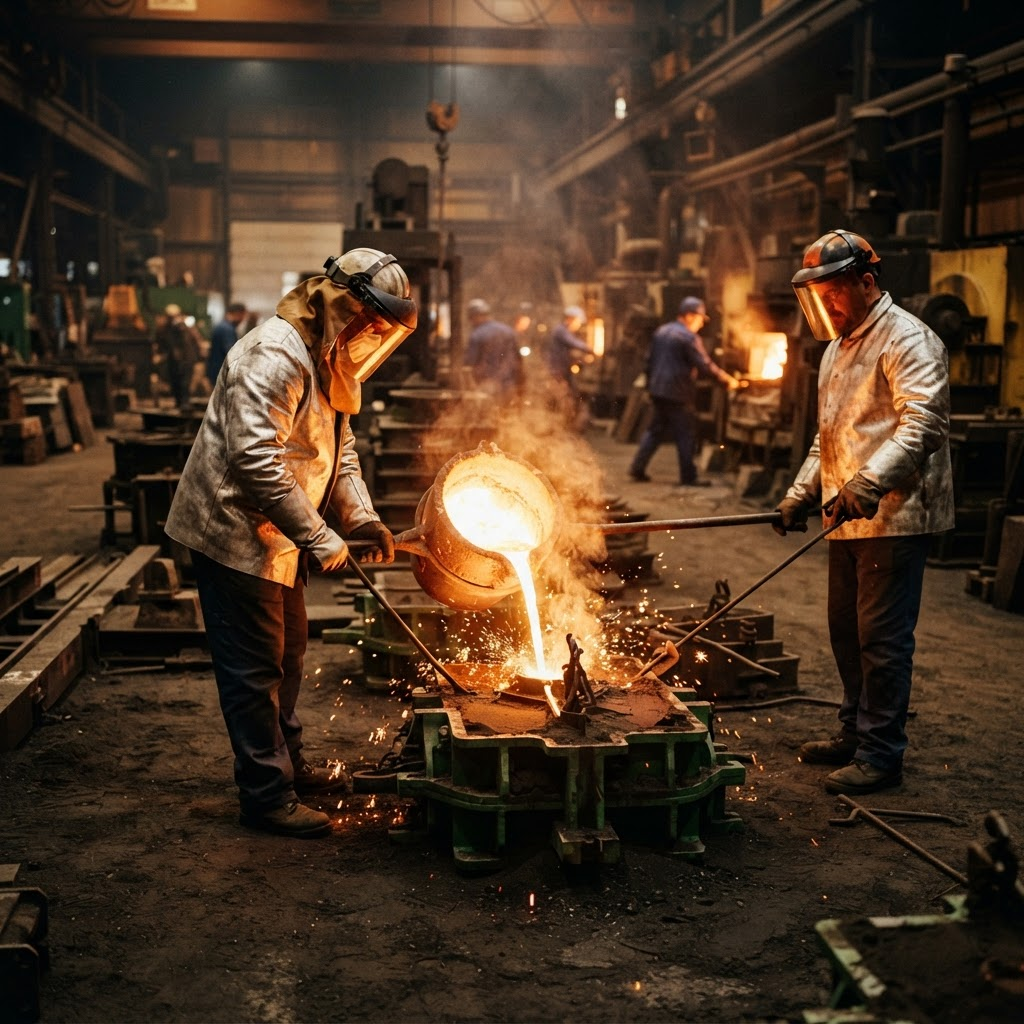
In a foundry, bentonite is mixed with silica sand and water to create the mould that shapes molten metal. The clay coats each sand grain and, when compacted, delivers the green strength that holds mould detail and the dry strength that survives the pour. Get the bond right and you get sharp, defect-free castings.
Sodium versus calcium bentonite
Sodium bentonite offers higher dry and hot strength and better resistance to thermal shock, while calcium bentonite provides good green strength and flowability. Many foundries use a blend tuned to their metal, moulding method, and casting geometry — and consistency of that blend is critical to a stable moulding line.
Permeability, reusability and defect control
The right bentonite balances strength with permeability so gases escape during pouring, preventing blows and pinholes. Because green sand is recirculated, a clay that retains its bonding power through repeated thermal cycling reduces new-sand additions and lowers overall cost per casting.
Specifying foundry-grade clay
Ask for tested green compression strength, hot strength, and montmorillonite content, and confirm consistent moisture on delivery. A foundry-grade bentonite from a direct manufacturer keeps your sand system stable batch after batch, which is where casting quality is really won.