From diaphragm walls to landfill liners, bentonite provides the low-permeability seal modern civil works depend on. A look at its geotechnical applications.
A natural sealing material
When bentonite hydrates it swells many times its dry volume, forming a dense, low-permeability gel. That property makes it invaluable in civil engineering wherever water needs to be kept in — or out — of the ground.
Slurry walls and diaphragm trenches
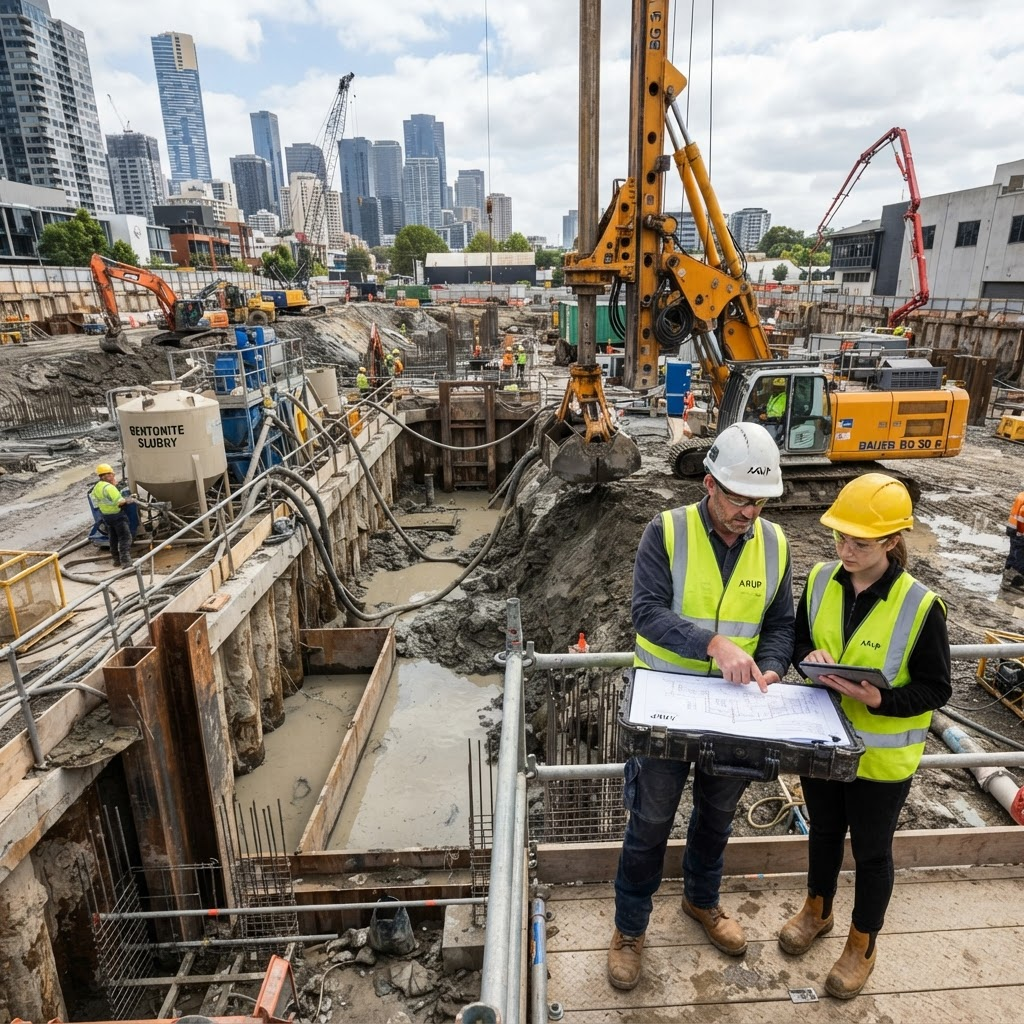
In deep excavations, a bentonite slurry supports the trench walls and prevents collapse before concrete is placed. The clay builds a stable filter cake against the soil face, allowing contractors to construct diaphragm walls and bored piles safely in unstable ground.
Waterproofing and containment
Bentonite is used in geosynthetic clay liners for landfills, ponds, and tunnels, where its self-sealing behaviour contains liquids and resists leakage even if the liner is punctured. It also features in waterproofing membranes for basements and foundations.
Selecting the right grade
Civil applications demand a high-swelling sodium bentonite with controlled granulometry. A consistent, tested civil-engineering grade ensures the seal performs to design specification across the whole site.