Salt is a foundational feedstock for the chemical industry. We explain its role in the chlor-alkali process and why purity drives process efficiency.
Salt as a chemical feedstock
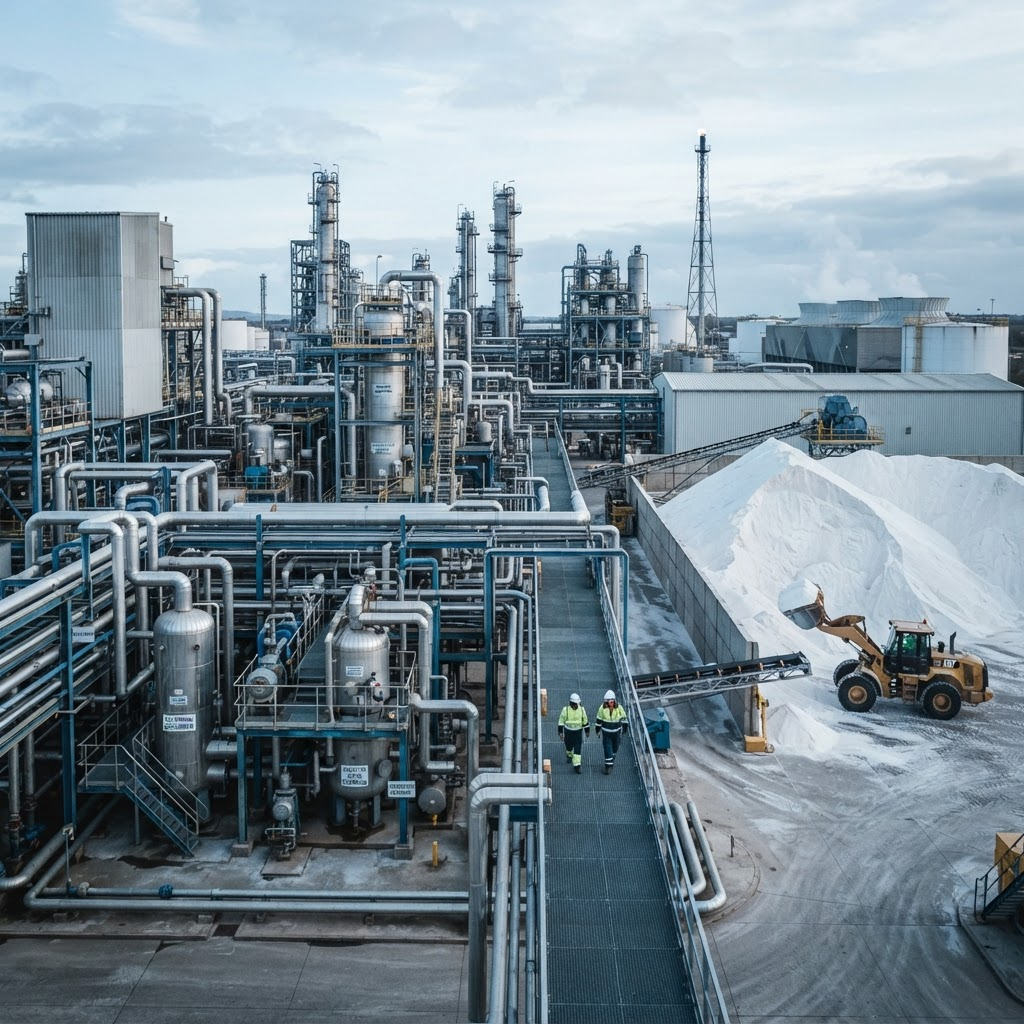
Beyond the kitchen, salt is one of the most important raw materials in the chemical industry. It is the primary feedstock for the chlor-alkali process, which produces chlorine, caustic soda, and hydrogen — building blocks for countless downstream products.
Inside the chlor-alkali process
Brine made from industrial salt is electrolysed to split it into chlorine gas and sodium hydroxide. The purity of the salt directly affects membrane life, energy consumption, and product quality in the electrolysis cells.
Why impurities are costly
Calcium, magnesium, and sulphate impurities foul membranes and reduce cell efficiency, forcing extra brine purification. A high-purity industrial salt reduces treatment load and protects expensive plant equipment.
Bulk reliability for chemical plants
Chemical manufacturers run continuously and consume salt at scale, so consistent purity and uninterrupted supply are essential. Direct-from-manufacturer sourcing supports the stable feedstock quality these processes require.