Coated papers owe their smooth, printable surface to kaolin. We explore how particle shape and brightness drive opacity, gloss, and ink receptivity.
Why paper mills use kaolin
Kaolin is used both as a filler within the sheet and as a coating pigment on the surface. As a filler it improves opacity and reduces fibre cost; as a coating it creates the smooth, bright, receptive surface that high-quality printing requires.
Particle shape and coverage
The platy structure of kaolin particles lets them align flat on the paper surface, delivering excellent coverage, smoothness, and gloss. Fine, well-graded coating clays fill the gaps between fibres and produce a uniform sheet that accepts ink cleanly.
Brightness and opacity
High-brightness kaolin lifts the whiteness and opacity of the finished paper without excessive coat weight. That means printers get sharp contrast and colour fidelity while mills keep coating costs under control.
Runnability on high-speed machines
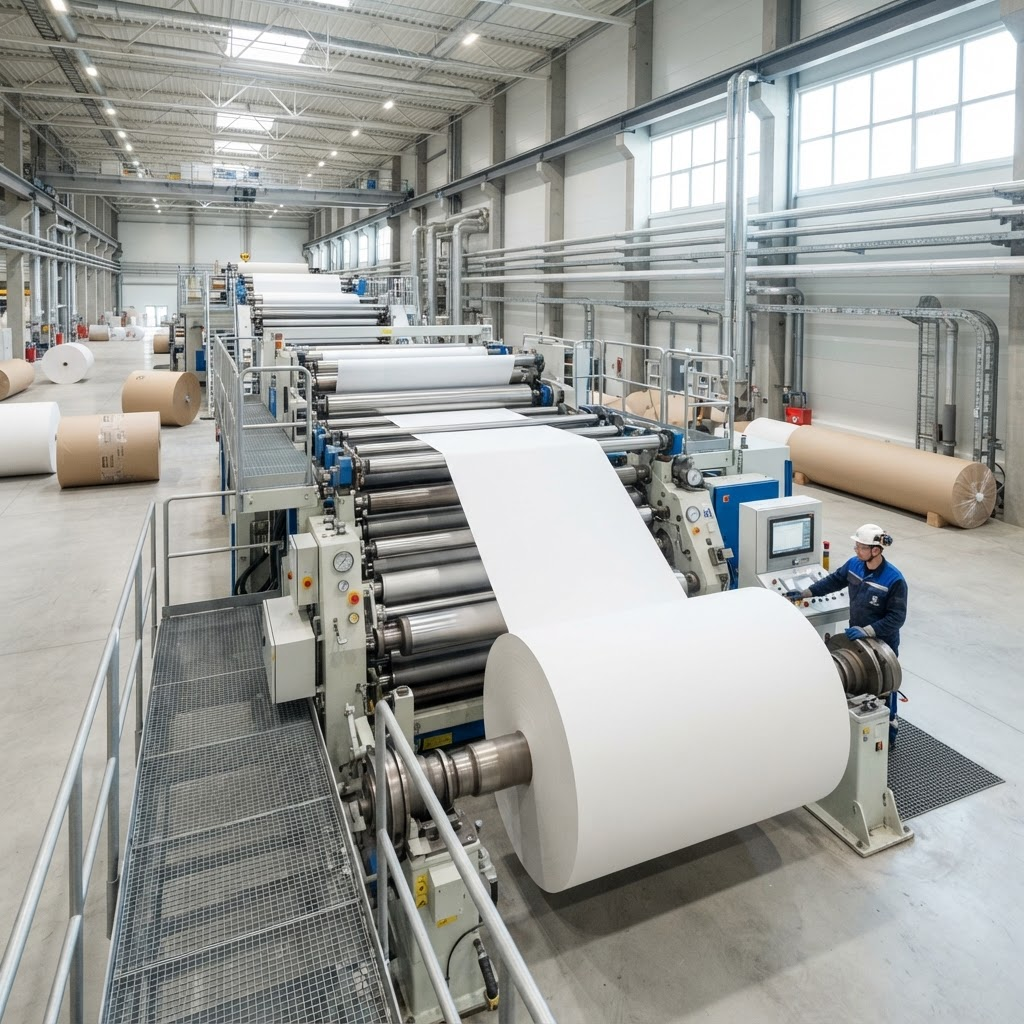
Modern coating machines run at high speeds, so rheology and consistency are everything. A paper-grade kaolin with stable viscosity and particle distribution keeps coating uniform and prevents costly web breaks and downtime.